Thomas
Kühnapfel
1966 — Rees, Germany
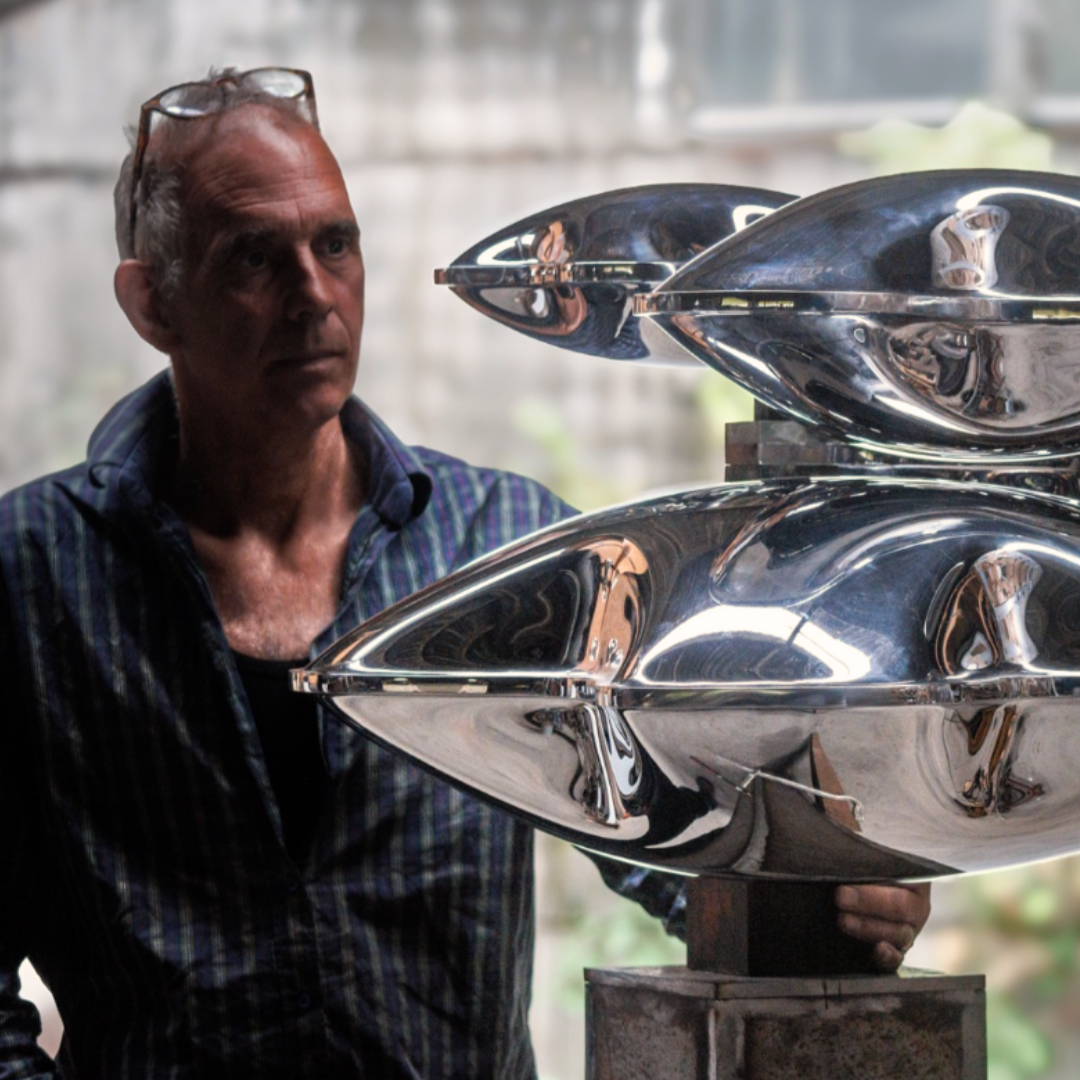
Thomas Kühnapfel is a German sculptor working in solid steel, a material that resists as much as it yields.
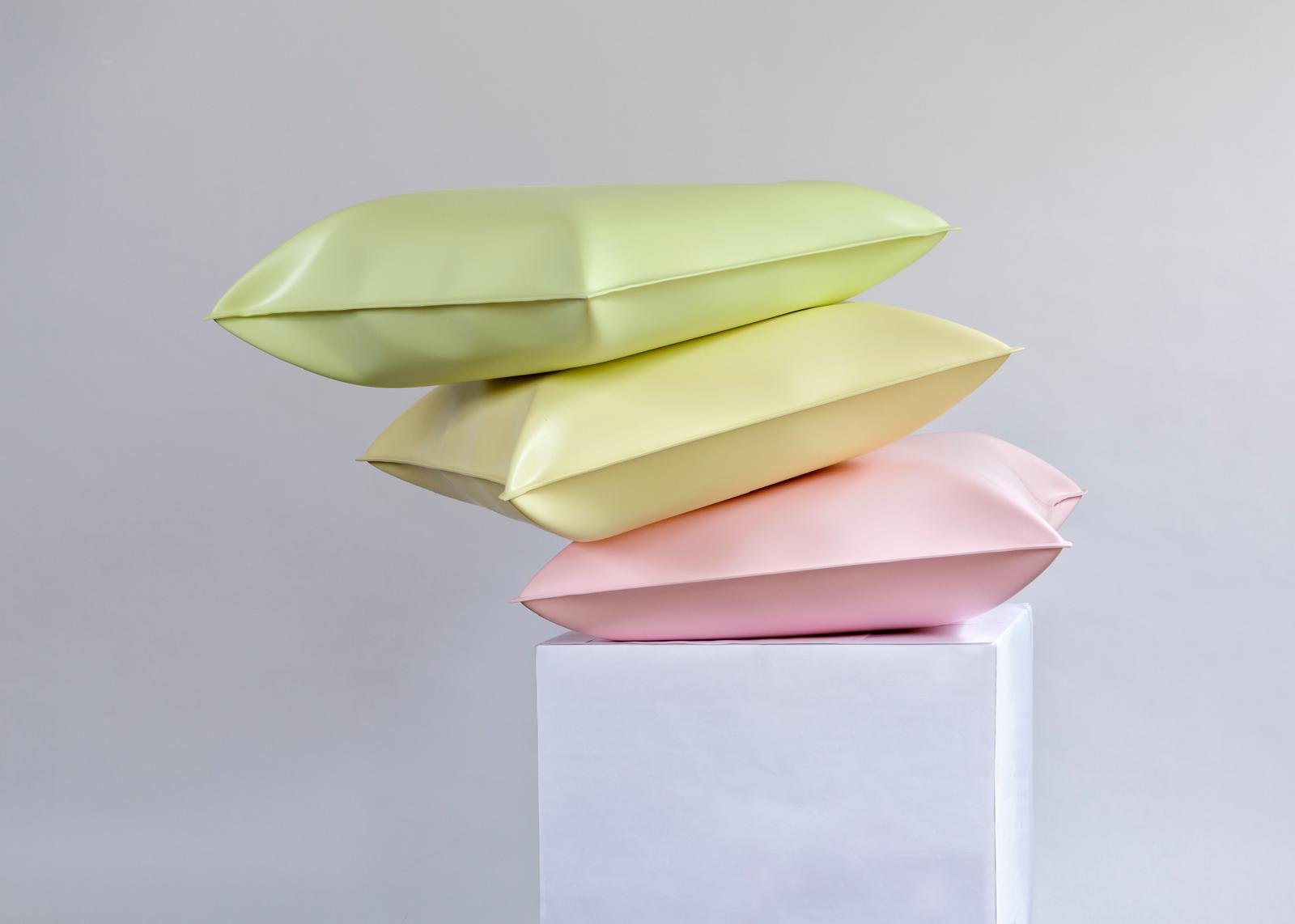
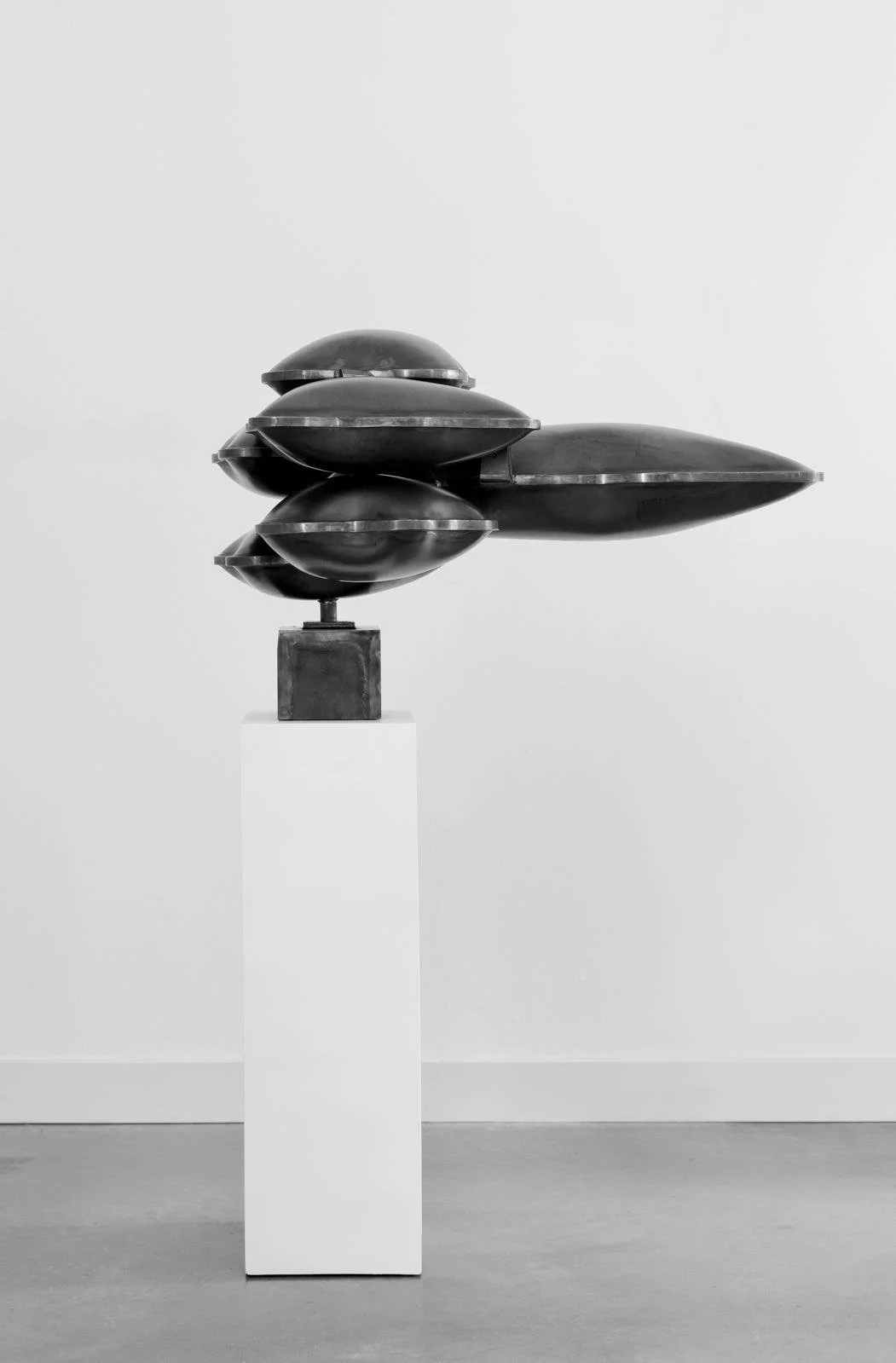
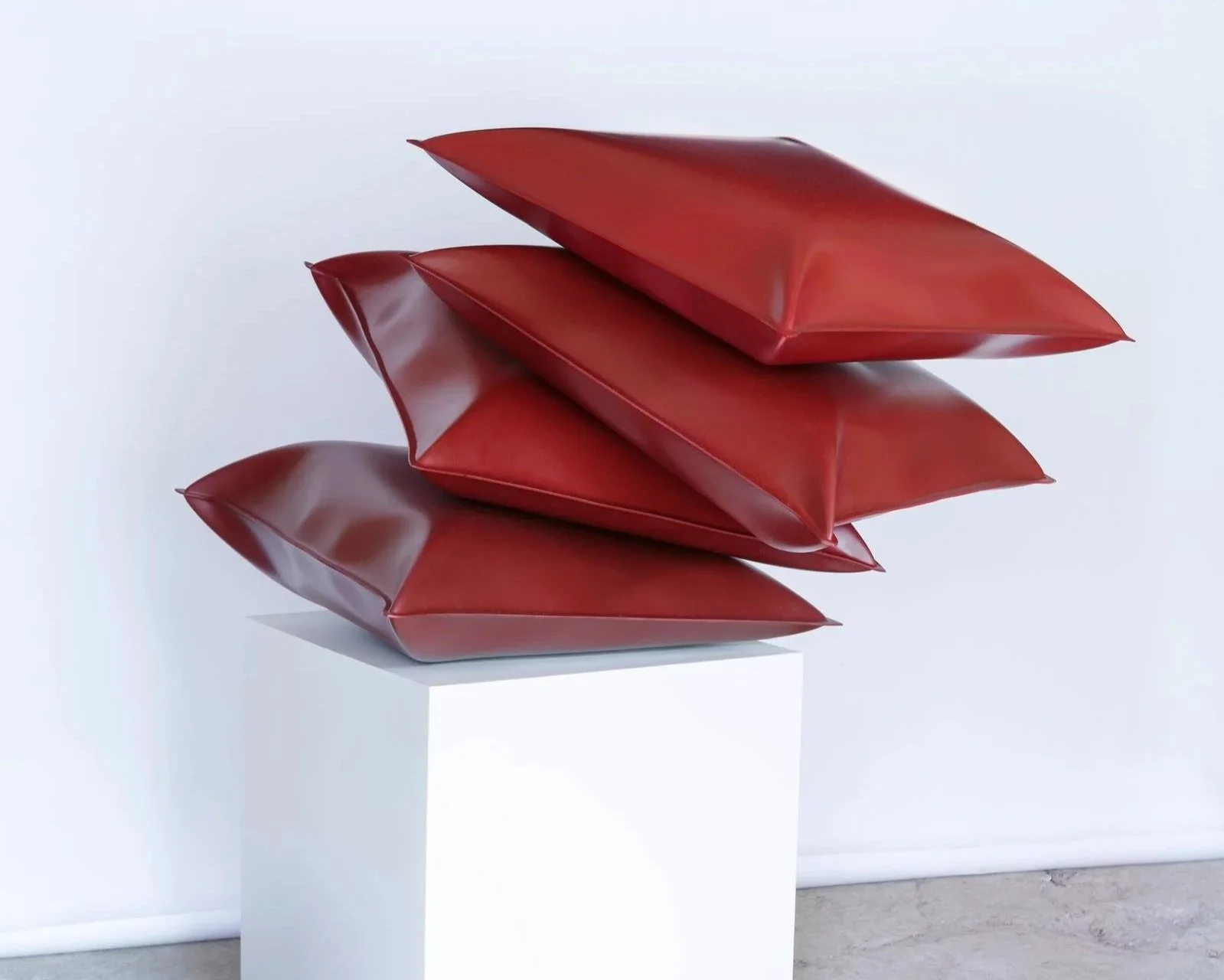
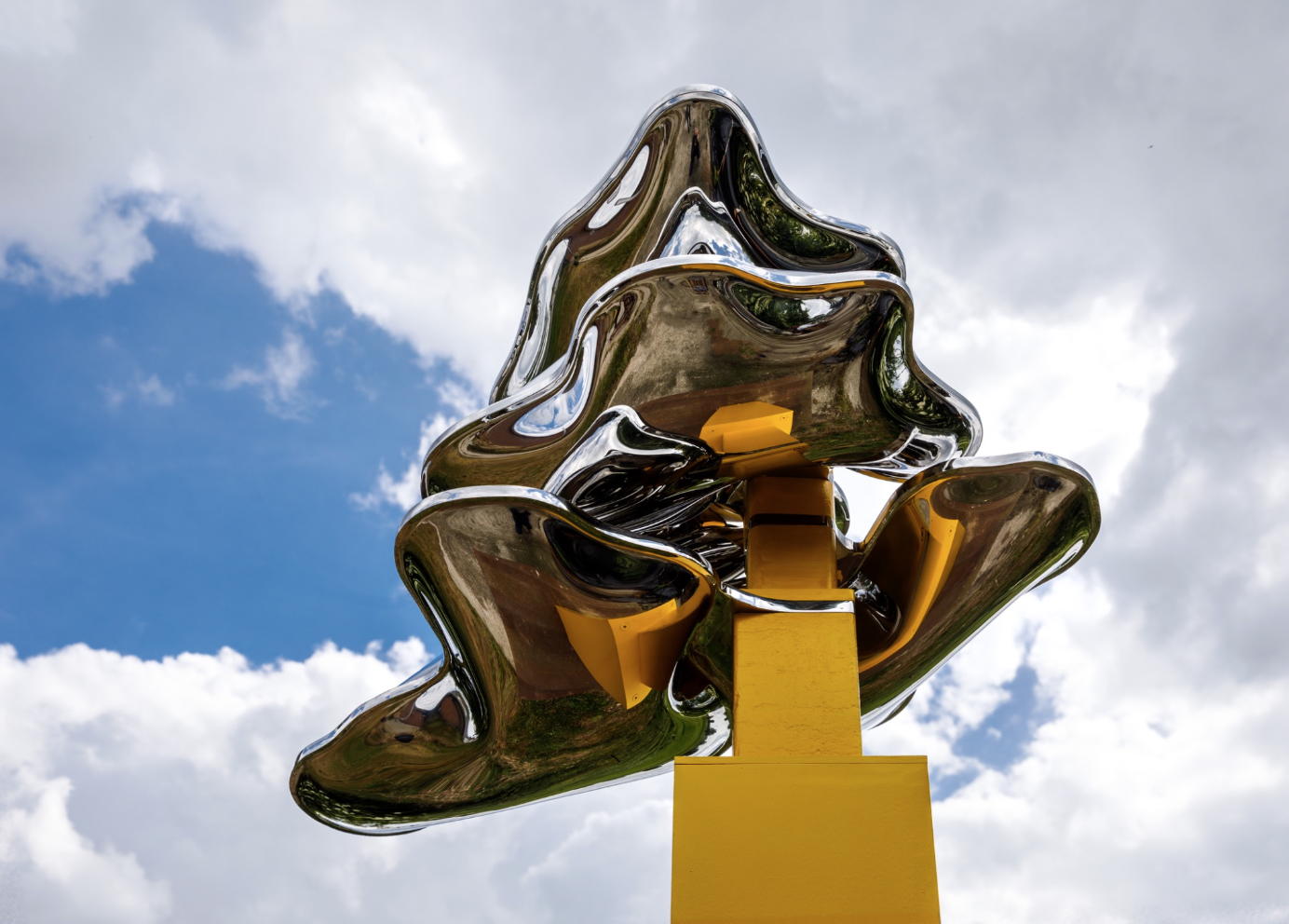
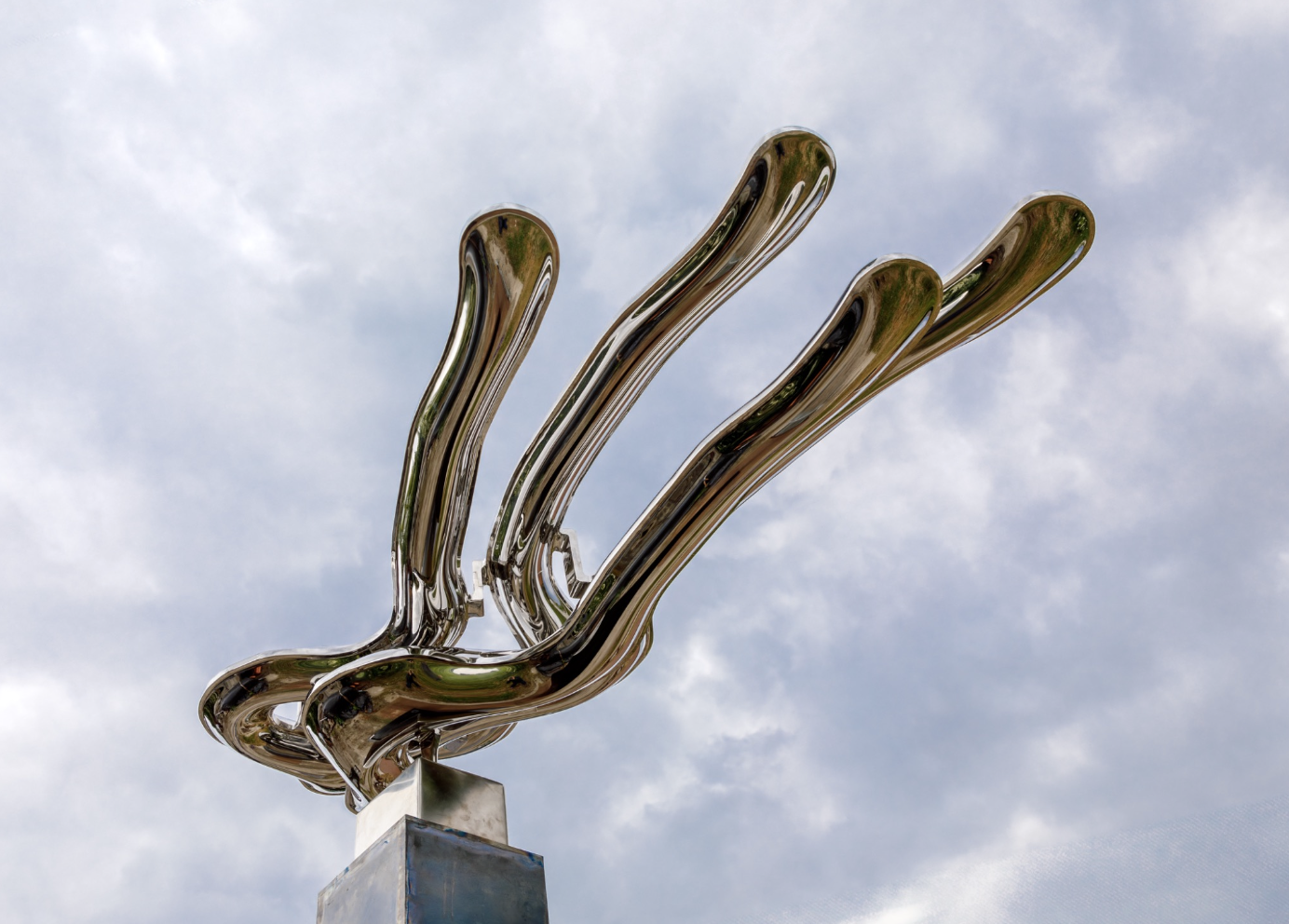
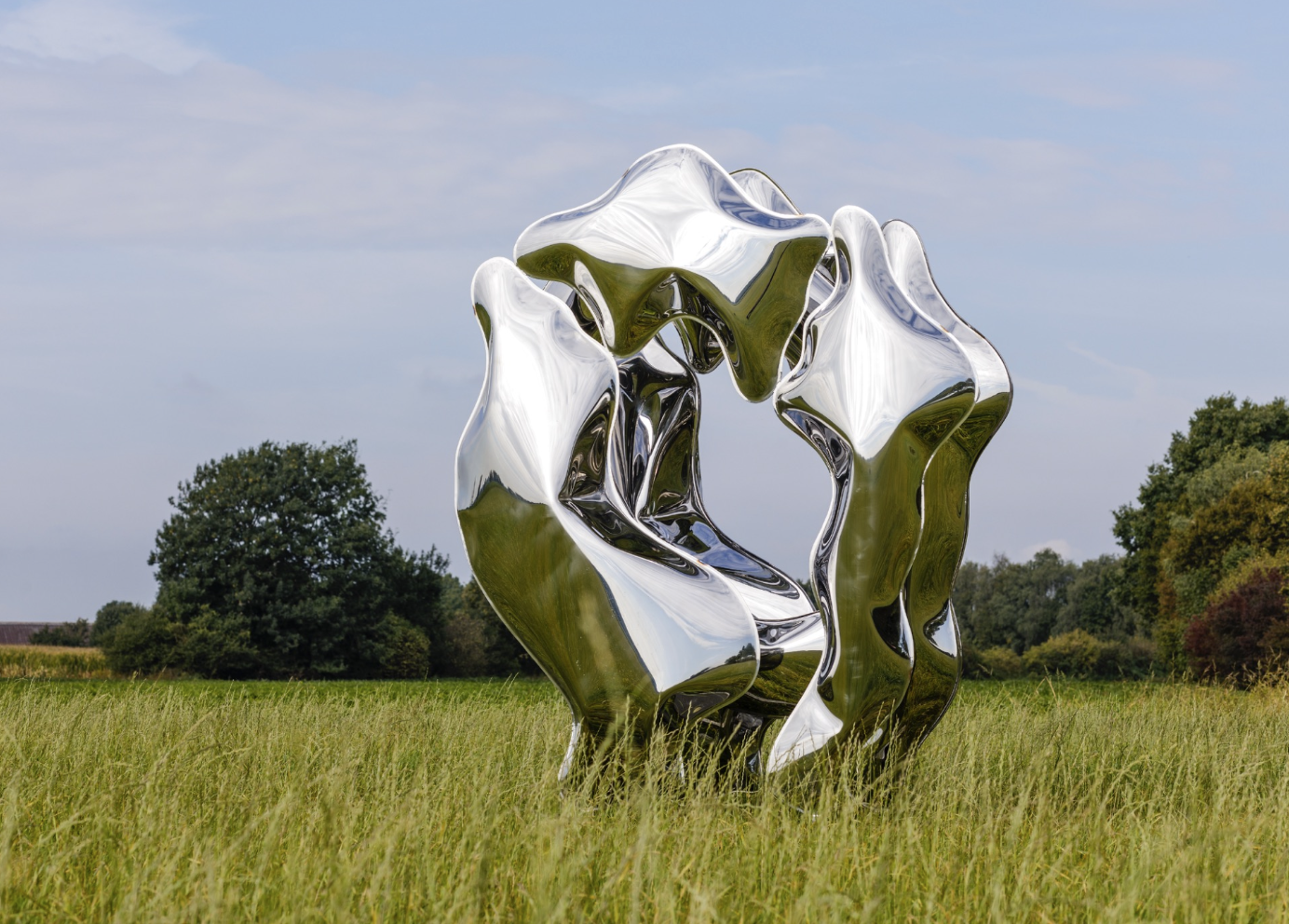
Since the mid-1990s, he has developed a singular process: subjecting sheets of steel and stainless steel to extreme pressure, until the metal itself is forced to expand and curve from within.
There is no carving away, no modeling of a soft substance into shape. The sculpture emerges through sheer physical resistance, the material pushed to its structural limits until it finds a new, self-supporting form.
This is a demanding, almost combative relationship with matter. Steel does not want to become volume; it wants to stay flat, rigid, unyielding.
Kühnapfel's practice lies precisely in that confrontation: controlling immense force just enough to let the material find its own necessary shape, without ever fully dictating the outcome.
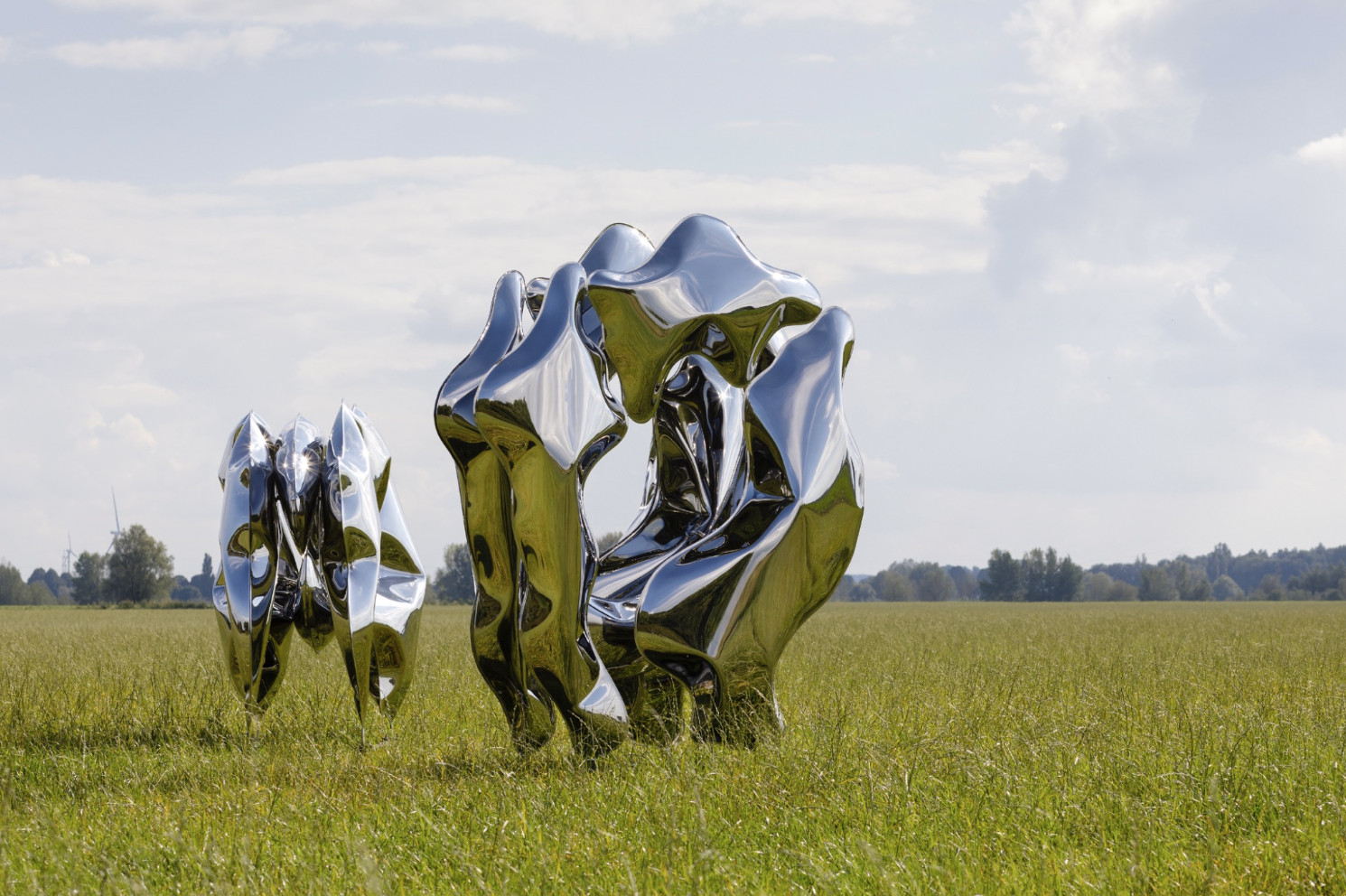
The result is a body of work that feels paradoxically weightless: taut, swollen surfaces, polished to a mirror finish, that seem to breathe despite being made of one of the heaviest, most obstinate materials sculpture has to offer.
Kühnapfel studied at the Kunstakademie Düsseldorf, where he became the first student to work under Tony Cragg, a formative apprenticeship that shaped his rigorous, material-driven approach to form.
In 1990, he received the academy's Bernhard Hoetger Prize.
His large-scale steel works, among them the celebrated pair Big Animal (2017), have been shown at institutions and fairs including Art Basel Miami Beach, Museum Kurhaus Kleve, and the Skulpturenpark Waldfrieden.
He lives and works in Rees on the Lower Rhine.