
Tanja Thordsen
1974 — Niebüll, GER
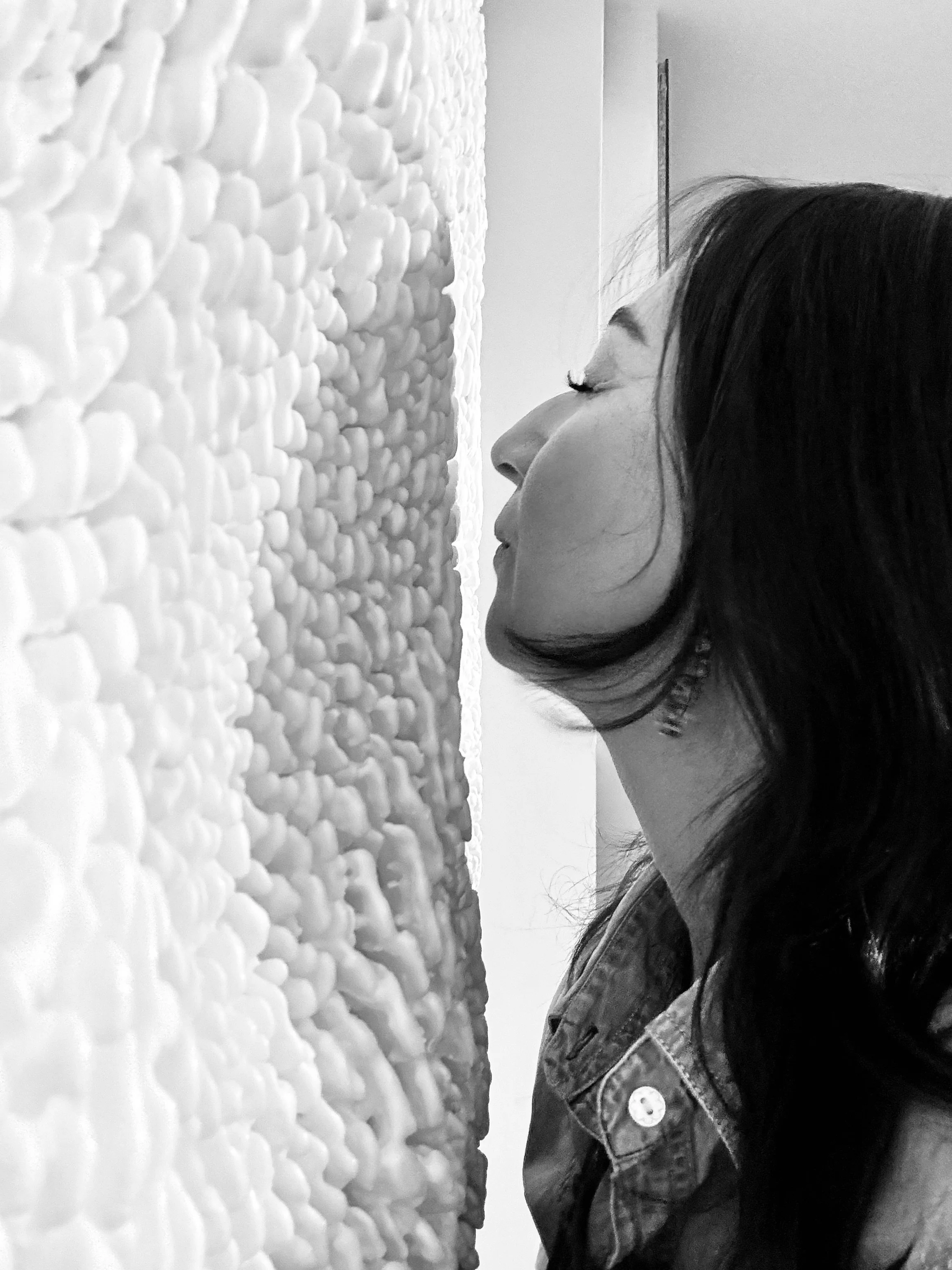
Tanja Thordsen’s artistic practice explores the fundamental interconnectedness between bodies, material, perception, and the natural world. Born with mirror-touch synesthesia, a neurological variation of perception in which observed touch and movement can trigger corresponding physical sensations in one’s own body, Thordsen experiences the boundaries between self and other with unusual intensity. This heightened sensory perception forms an essential point of departure for her work.
Her practice is informed by the idea that individual forms are never entirely separate, but exist through proximity, resonance, and mutual perception. Thordsen relates this understanding to the “Blanket Truth” metaphor from I Heart Huckabees (2004), in which the universe is imagined as a single piece of fabric: everything emerges from the same material and therefore remains inherently connected.
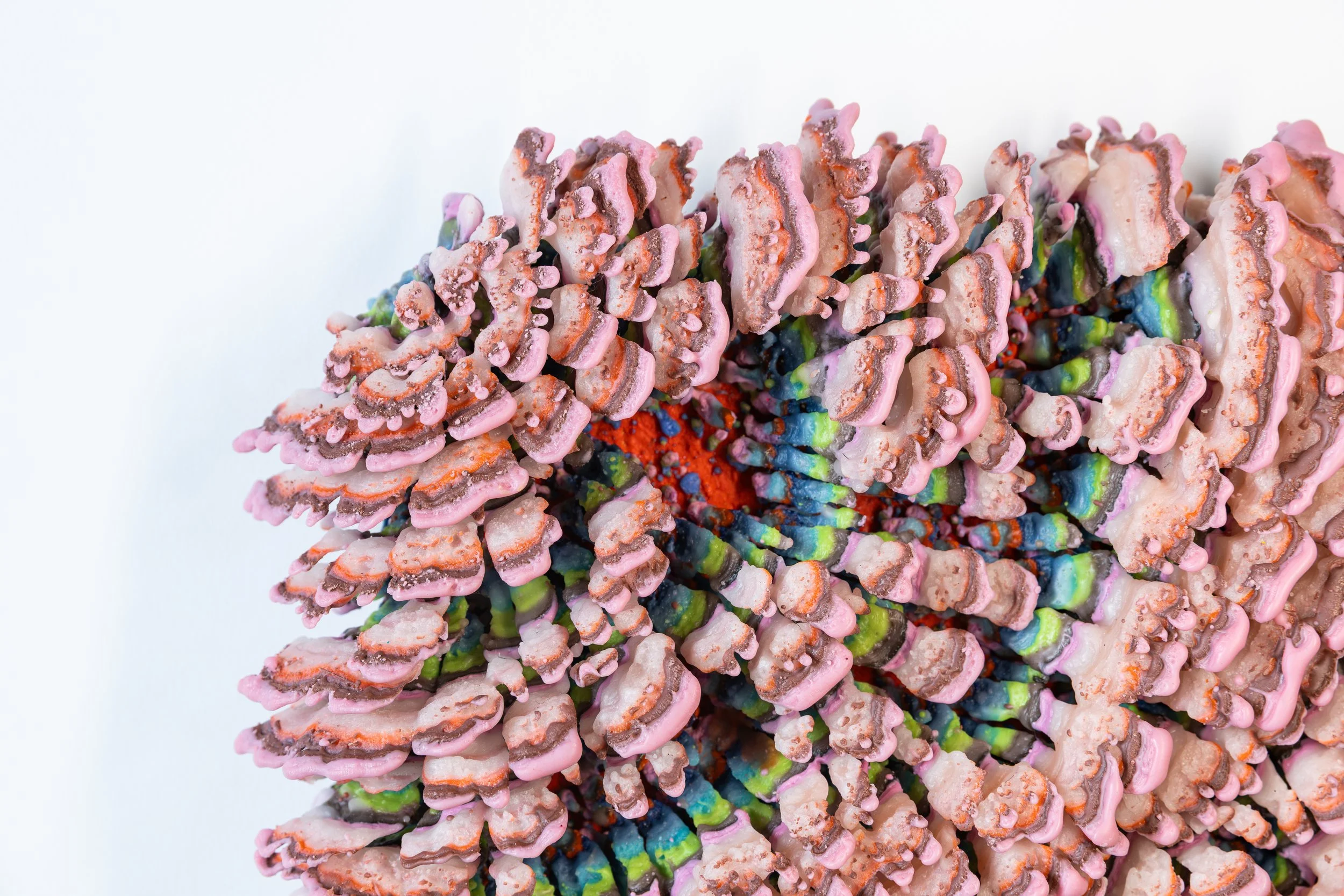
At the center of Thordsen’s work is pure beeswax — a material whose relationship to art reaches back thousands of years. Pigmented beeswax was already used in antiquity in encaustic painting, where heated wax served as a binding medium for color. Its remarkable durability is evident in surviving ancient works, most famously the Roman-period Fayum mummy portraits.
Thordsen approaches beeswax not only through this long material history, but through its biological origin. Within the beehive, touch, proximity, and collective organization are fundamental. Wax emerges from this highly interconnected system and, for the artist, becomes a material expression of memory, transformation, and relationship.
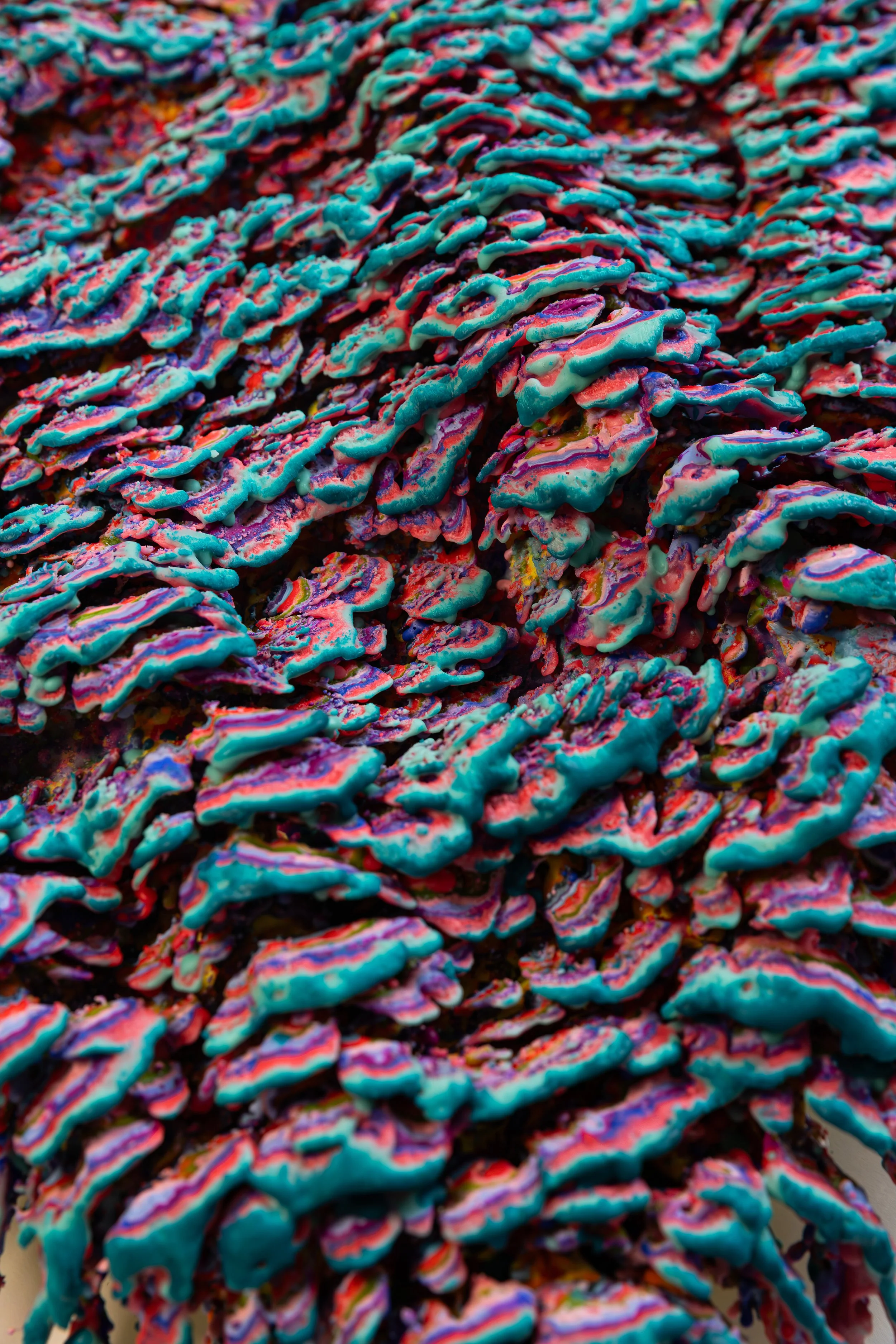
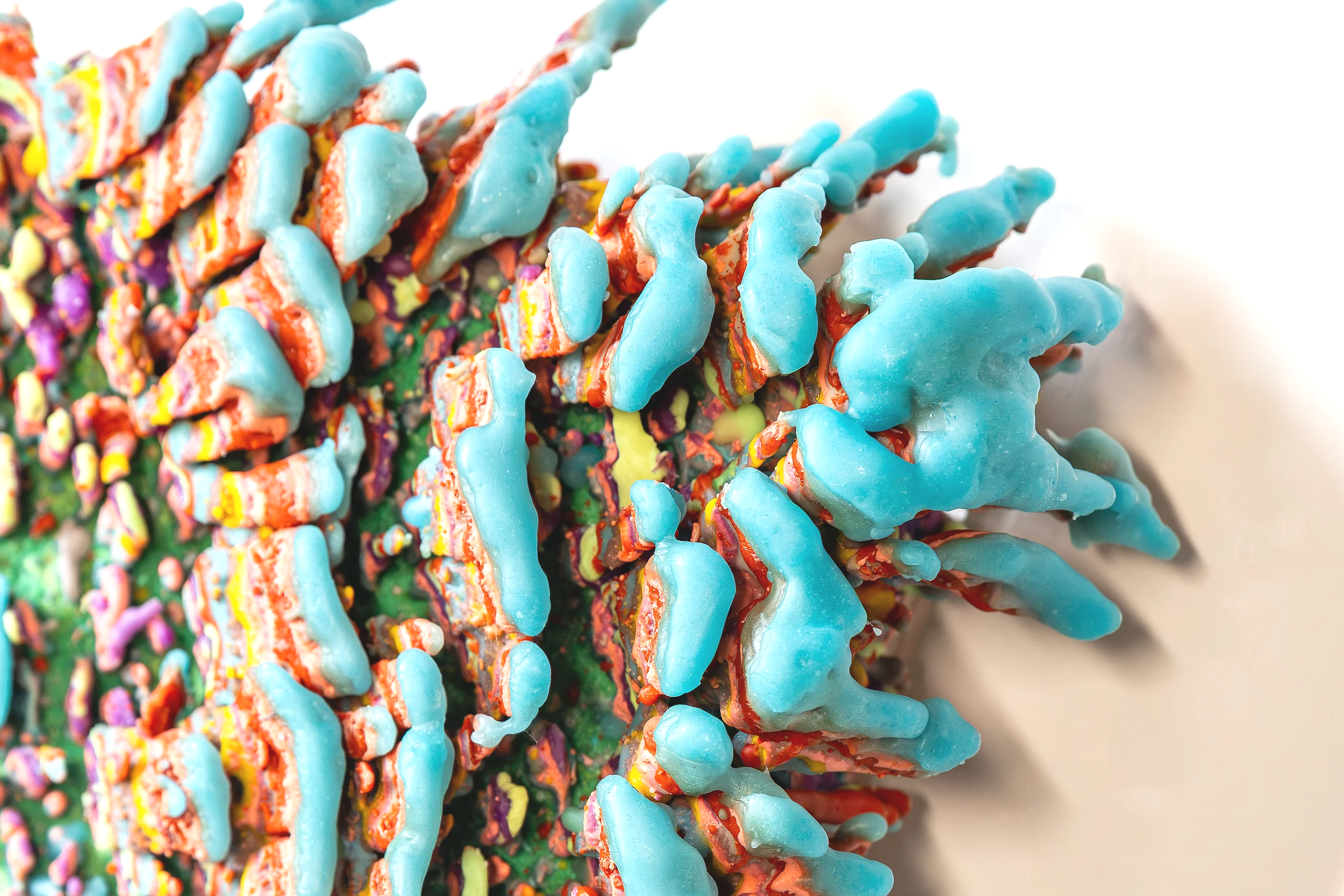
Rather than imposing a predetermined form upon it, Thordsen responds to the wax’s own physical properties — its translucency, temperature sensitivity, fluidity, and organic irregularity. Her works develop gradually, through processes of layering, accumulation, and transformation. In this way, their structures appear to grow rather than simply being constructed, echoing processes found in nature.
The resulting works move between sculpture, surface, and sensory experience. Light penetrates and reflects through layers of wax; pigments become embedded within the material rather than simply resting upon it. What initially appears visual therefore carries a strongly physical dimension.
In Thordsen’s practice, material and perception ultimately become inseparable. Beeswax functions simultaneously as artistic medium, organic substance, and metaphor: a material shaped by collective structures that allows her to give physical form to an experience of the world in which touch, memory, body, and environment remain continuously connected.